
Remember Marie Kondo?
She was everywhere, teaching the world to tidy up and keep only what “sparks joy,” beginning around 2014 in the U.S.
At one point, I heard an interview where she said something that stopped me in my tracks. She said, a person should own no more than 30 books.
Thirty.
What?! I was incredulous.
My next response was, “Oh. You mean… by the side of the bed?”
Because if you’re my kind of person, thirty books is not a library, it’s a mood. 30 books is a warm up.
And yet, that moment gave me a surprisingly useful lens for National Reading Month, which begins March 1, by the way.
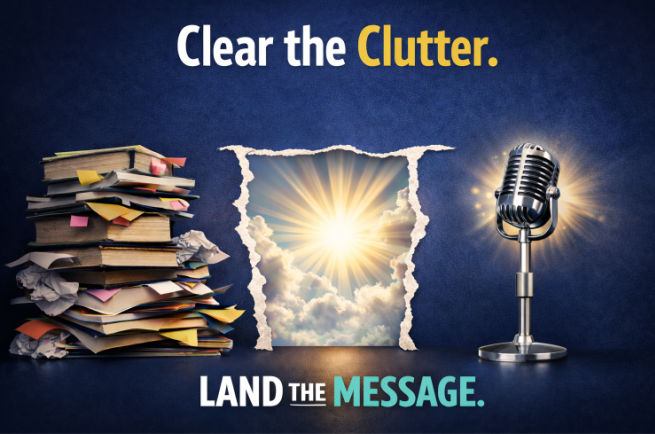
Now, Marie Kondo was was referring to the physical clutter of books. But when it comes to book publicity and marketing, the clutter is often something else entirely.
It’s messaging clutter.
It’s when an author has too many angles, too many hooks, too many “also’s,” and too many brilliant key messages all competing for first place. So instead of choosing the best one for the audience in front of them, they default to a one size fits all pitch and a general answer that could go anywhere.
That creates friction because the media person or the listener has to connect the dots and figure out how what you are saying applies to them. And it can become boring for the guest, too, because you’re saying the same things over and over again. (Yawn)
And yes, all that clutter creates friction.
Here’s the truth no one wants to hear when they love their material. Reading friction is usually not about the reader. It’s about the writing.
We’re not speaking about the quality of your ideas, but the way they are arranged and delivered. People stop when they have to work too hard to answer basic questions:
- What is this really about?
- Who is it for?
- What changes if I keep going?
And hosts, producers, editors, and podcast bookers are readers too. They are scanning for those same three things, except they do it faster, with less patience, and with 200 other emails sitting right behind yours.
So if your message feels like “a lot,” they do what all overwhelmed humans do. They move on.
This is not because you aren’t excellent. It’s because you made them do extra work, and everyone feels overworked these days. The bottom line is no one is going to take the time to figure out what you are trying to say. You have to say it. Directly and quickly.
Media Darling Moment: A producer once told me, “If I can’t see the outcome in 10 seconds, I can’t book it.” That’s the whole game.
You don’t get booked because you’re impressive, although that never hurts. You get booked because the takeaways are obvious.
And this is where Marie Kondo secretly becomes a publicity teacher.
The best pitches and the best openings feel like they’ve been “Kondo’d”:
- one clear promise
- one clear audience
- one clear outcome
So just for fun, try this this week (and notice how quickly it gets slippery):
- Write your hook in 12 words. Not a vibe. The promise.
- Write your “who it’s for” line in one sentence that a producer could repeat.
- Write what changes for the audience after they hear from you.
If you just felt an internal “I can’t possibly do that”… you’re not alone. This is simple to describe, and easy to get wrong, especially when you’re inside your own work.
If you love tinkering and you have time, take the month of March and smooth the friction one section at a time in all of your materials. You’ll learn a lot.
But this month, don’t own fewer books to reduce clutter.
Make your messaging effortless. Make it easy for others to say yes, whether that’s reading your book, listening to an interview, or booking you in the first place.
Make it easy to say yes to you.
To your success!
Joanne
P.S. Keep it simple.
#NationalReadingMonth
#BookMarketing
#BookPublicity
#SavvySunday
#MediaDarling
If you’d like to receive juicy publicity secrets directly on a regular basis, join the Savvy Sunday Community at the bottom of this page.